RPg Graduates
Our RPg students are trained to take on thought leadership positions in both legal academia and practice. Graduates of our RPg programme are now faculty members at some of the most globally reputable and diverse institutions, including Oxford University, University of New South Wales, Peking University, and New York University (Shanghai). Other graduates are currently serving as judges and eminent practitioners in their jurisdictions.
Alumni Success Stories

Assistant Professor, Jindal Global Law School (JGLS)
Earning my PhD at HKU Law was a turning point in my academic journey and has significantly shaped the course of my subsequent career. I was attracted to HKU because of its strong research environment and its location in Asia, which was particularly relevant to my interest in competition law. The experience gave me the intellectual freedom to develop my research interests, think critically, and approach complex legal questions independently. I was particularly fortunate to have Professor (Dr.) Thomas Cheng as my supervisor. His detailed feedback, encouragement, and willingness to engage with my ideas were invaluable throughout the PhD and have influenced the way I approach research today. During this period, I had the opportunity to undertake a research stay at the Max Planck Institute for Innovation and Competition in Munich, which broadened my perspective on competition law. These experiences continue to shape my research and teaching. I currently serve as an Assistant Professor at Jindal Global Law School, O.P. Jindal Global University, India, where I focus on competition law and digital markets. I feel very fortunate to have had this journey at HKU, whose global standing and vibrant academic environment open doors to valuable intellectual and professional opportunities.
Professor Ngoc Son Bui
Professor of Asian Laws, Faculty of Law, University of OxfordI pursued my PhD at HKU Law because HKU Law is one of the finest law schools in the world. HKU Law is also an exceptional place to study Confucian constitutionalism, the theme of my PhD thesis. Professor Albert Chen, my supervisor, is a prominent scholar and one of very few legal scholars in the world to explore the relevance of Confucian culture to constitutional law.
During the program, I gained knowledge about not only Confucianism but also comparative constitutional law. Thanks to this integrated knowledge, in my academic development, I have situated Confucian culture and Asian experiences within global debate in comparative constitutional law. My advice is prospective or current PhD students should explore and combine a wide range of knowledge to prepare for their future academic development.
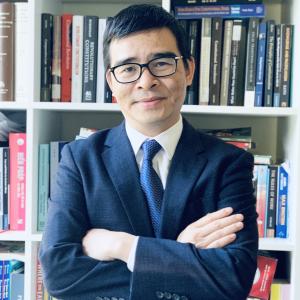
Professor Adele Carrai
Associate Professor, Department of Politics & International Relations, University of OxfordI chose to pursue my PhD at HKU Law because it offered something rare: the opportunity to undertake legal research without a formal law degree. Coming from political science, I was drawn to a faculty that welcomed interdisciplinary inquiry, allowing me to explore law through history, political theory, constitutional thought, and philosophy.
Beyond the exceptional scholars at the Law Faculty, HKU’s broader intellectual community and Hong Kong’s vibrant academic ecosystem made an enormous difference. Conversations with historians, philosophers, political scientists, and colleagues within HKU Law and across universities profoundly shaped my thinking.

Dr. Shiling Xiao
Lecturer in Law, The University of ManchesterI am immensely proud to be a graduate of HKU Law and deeply grateful for the world-class academic environment and support the Faculty provided throughout my PhD studies. As a bridge between East and West, HKU Law brings together leading academics and practitioners from around the world, creating a truly international and intellectually vibrant community.
I had the privilege of learning from leading scholars and exchanging ideas with academics from diverse jurisdictions. The Faculty is an exceptional place to study Chinese law and comparative law. My time at HKU Law laid a strong foundation for my academic career at the University of Manchester. I hope more PhD students will embrace the opportunities HKU Law offers and go on to build fulfilling and successful careers of their own.
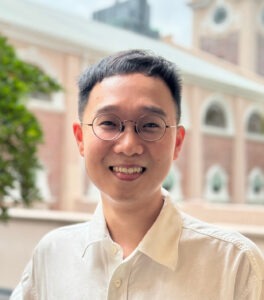
Professor Hao Xiong
Associate Professor, Law School, Fudan UniversityMy years at HKU Law shaped me far beyond the PhD itself. What I remember most is the remarkable support system—from the Faculty and Graduate School to career development services—and the supervisor who offered sustained guidance, encouragement, and intellectual openness.
The rigorous methodological training was probably the course we feared most; the pressure was considerable, but its value has proved lifelong. Equally important were my fellow PhD students. We prepared for examinations together, but also shared meals, sports, hikes, conferences, and countless conversations. Those friendships made an intense academic journey deeply human, while HKU’s close links with leading scholars and institutions worldwide broadened my academic horizon in ways that have stayed with me throughout my career.
One area that could be strengthened is preparation for the academic environment and evaluation systems of Chinese Mainland universities. For some of us, entering that system meant learning many of its rules through experience. Better preparation would make that transition much smoother.
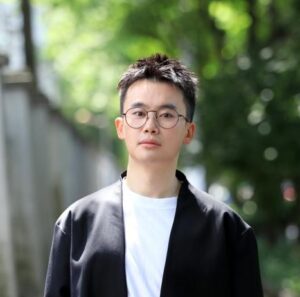
Professor Yan Xu
Scientia Associate Professor, UNSW SydneyMy first visit to Hong Kong left me captivated by the city’s vibrancy, beautiful campuses, and the interaction between East and West, tradition and modernity. Determined to return, I joined HKU Law’s PhD programme, where initial excitement soon gave way to anxiety and frustration. Every step, from finding a topic to making a convincing argument, brought challenges. The journey was demanding but rewarding.
The intellectual enlightenment and joy of reading classic literature, conversing with researchers, and overcoming uncertainties were unmatched. The process offered far more than a degree certificate: it developed intellectual vigour, critical thinking, and the confidence and courage to face challenges and setbacks. These attributes have sustained my scholarship and enabled me to contribute to public policy through governments and international organisations, including the United Nations. My advice is to persevere through frustrations, challenge yourself, and embrace the intellectual journey with curiosity. I am honoured to be an HKU alumna.